If you are thinking about radiofrequency treatment and want straight answers before you book, this guide is for you. It covers the questions patients ask most: whether radiofrequency is safe, who it suits, what a session feels like, how many you might need, what happens afterwards, and how to tell a good clinic from an average one.
We design and manufacture the radiofrequency platforms used in clinics across Europe and beyond. We do not treat patients, and we do not set the prices clinics charge. What we can do is explain how the technology works and what a well-run treatment looks like, so that the conversation you have with your practitioner starts from solid ground.
Radiofrequency has been part of aesthetic and physiotherapy practice in Spain, Italy and Portugal for well over a decade. Yet much of what is written about it online is sales copy. This guide is not. Where we describe what the energy does in tissue, we say which research that comes from. Where something depends on you, your skin and your practitioner, we say that too.
What radiofrequency treatment is, in a paragraph
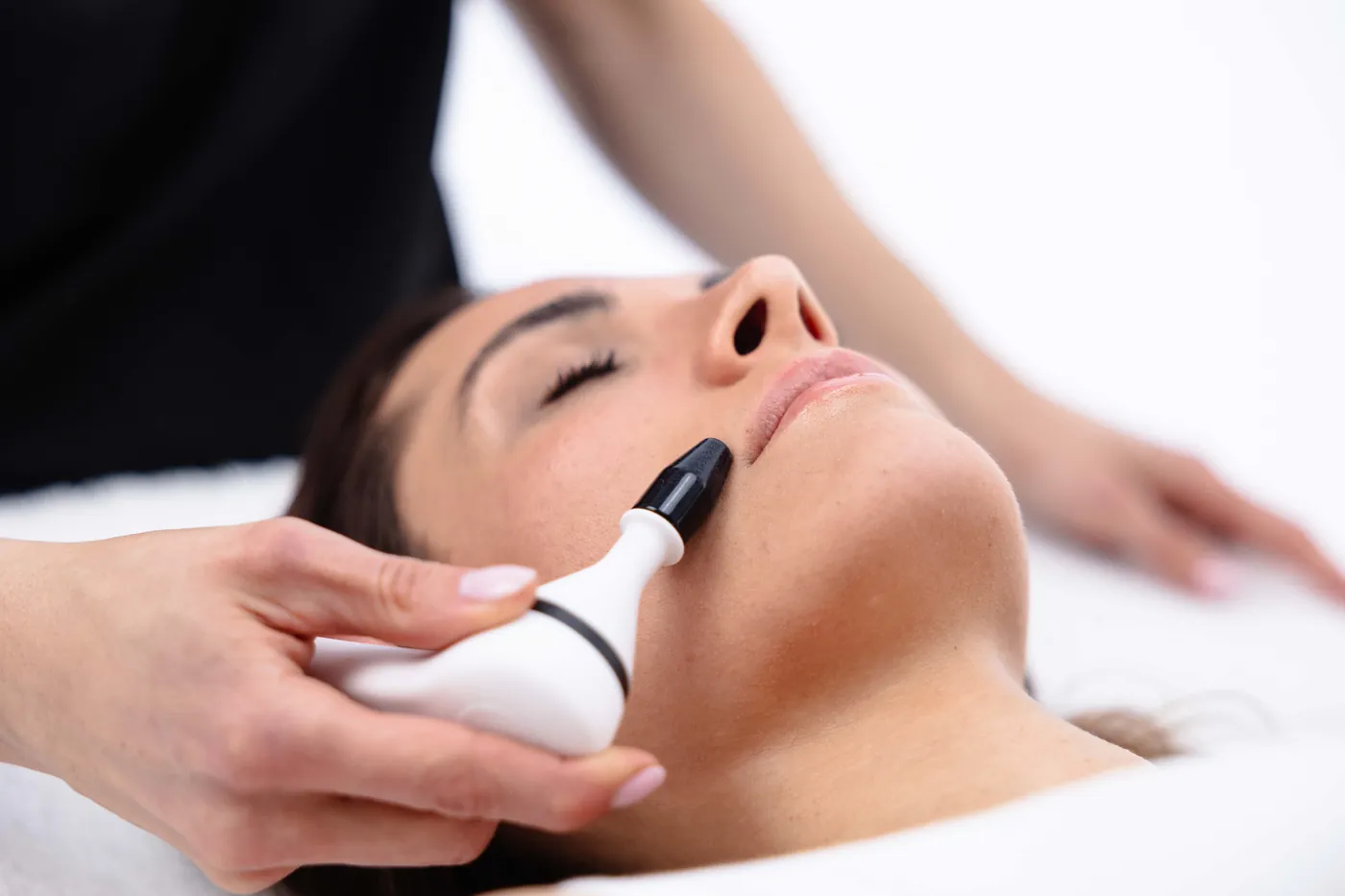
Radiofrequency treatment passes a low-level electrical current through the skin and the tissue beneath it. The current meets resistance in the tissue, and that resistance produces gentle, controlled warmth from the inside. The practitioner moves a handpiece over the area, keeping the tissue at a steady working temperature for a set time. Nothing is injected, nothing is cut, and the surface of the skin stays intact.
The reason clinics use it is what that warmth does in the dermis, the living layer under the surface. The laboratory research behind the technology describes fibroblast activation, the cells responsible for making collagen and elastin, along with increased local circulation and changes in the way tissue is oxygenated and repairs itself. Clinics apply this to skin that has lost firmness, to areas where circulation and drainage are sluggish, and to tissue recovering from surgery or strain.
That is the short version. The rest of this guide deals with the decision itself: whether it is safe, whether it suits you, and what a course really involves.
Capacitive, resistive and bipolar: three ways the energy is delivered
You will see these words on clinic menus, and they describe where the energy goes rather than how strong it is.
- Capacitive delivery works closest to the surface, in the skin and the layer just beneath it. It is the mode clinics choose when the aim is skin quality and firmness.
- Resistive delivery reaches deeper, into the fat layer, muscle and connective tissue. It is chosen for tone, circulation and tissue that sits further down.
- Bipolar delivery keeps the current between two electrodes set close together on one handpiece, so the energy stays very superficial, around a millimetre deep. That precision is why it appears in face and neck work.
Capacitive and resistive delivery are usually monopolar: the current passes from the handpiece to a return plate placed elsewhere on the body, which is what lets it reach further. Many sessions move between modes as the practitioner works across an area, and a good practitioner can tell you which mode they are using and why.
Is radiofrequency treatment safe?
This is the question most people type into Google first, so here is the honest answer: radiofrequency is a non-invasive treatment with a long record of use in clinics, and the energy it uses is non-ionising. That means it does not carry the kind of risk associated with X-rays or ultraviolet light. It does not damage DNA and it does not accumulate in the body. The platforms clinics use are CE-marked medical or aesthetic devices, which means the manufacturer has had to demonstrate that they perform as described and that their safety has been assessed.
Safety in practice comes from three things, and only one of them is the technology.
The first is temperature control. A good radiofrequency platform measures the temperature of the tissue continuously and keeps it inside a working range, typically around 40 to 42 degrees Celsius at the surface. That is warm, like a hot bath, not hot. The practitioner keeps the handpiece moving so no single spot is held for too long.
The second is screening. Before any treatment, a competent clinic will ask about your medical history and check for the situations where radiofrequency is not appropriate (the next section lists them). This is not a formality. It is the step that prevents almost every problem.
The third is the practitioner. The same platform in different hands produces different experiences. Training, protocol and attention matter more than the brand on the side of the device.
Side effects you can expect
Most people see mild redness and feel warmth in the treated area for a short time afterwards, usually gone within a few hours. Some people notice slight swelling or tenderness, especially after body treatments, which settles on its own. Those are the normal responses of tissue that has been warmed and worked, and they are the reason your practitioner will tell you what to expect before you leave.
Side effects that are rare and worth knowing about
If the tissue is overheated, which should not happen with proper temperature monitoring, a small burn or blister is possible. Very occasionally people report a temporary change in sensation in the area. If anything you notice after treatment seems out of proportion to what you were told to expect, contact the clinic the same day. A reputable clinic will want to know.
Who radiofrequency is for, and who should speak to a doctor first
Radiofrequency suits a wide range of people because it works with the body’s own repair processes rather than overriding them. It is used on all skin types and tones, because it does not rely on light being absorbed by pigment the way lasers do. It is used on people in their thirties who have noticed early changes, and on people in their sixties and seventies who want to look after the skin they have. It is used on men as much as women, and increasingly on people recovering from surgery or sport.
The people who get the most from it tend to share one thing: realistic expectations. Radiofrequency is a treatment that supports the tissue’s own activity over a course of sessions. It is not a surgical result and it does not pretend to be. If what you want is a dramatic change in a single visit, this is probably not the right treatment, and a good clinic will tell you so.
Situations clinics typically screen for
Your practitioner makes the final decision, but clinics typically will not treat, or will ask for your doctor’s view first, if any of the following apply:
- A pacemaker, defibrillator or any other implanted electronic device
- Pregnancy, or trying to conceive
- Metal implants, plates, pins or prostheses in the area to be treated
- An active skin infection, open wound or rash in the area
- Cancer in the area, or cancer treatment in recent months
- Epilepsy
- Diabetes that is not well controlled
- A blood-clotting disorder, or anticoagulant medication
- Recent injectable or surgical treatment in the same area (the clinic will advise on timing)
- Varicose veins, phlebitis or another acute vein condition in the area
- Reduced sensation to heat or pain in the area
- Retinoid or acne medication in the last three months
- Heat urticaria (hives brought on by warmth)
- An allergy to nickel or chromium
- Under 18: treatment only with a parent’s or guardian’s consent
If one of these applies to you, say so at the consultation. Some are absolute, some depend on the detail, and a practitioner cannot make that call without the information.
What radiofrequency is used for
Clinics use radiofrequency wherever the aim is to support the skin’s own structure, improve local circulation, or help tissue recover. On the face, that covers most of the concerns people bring to a consultation.
On the face
Radiofrequency skin tightening is the most searched-for use and the one most people start with: skin on the cheeks, jaw and neck that has started to feel less firm than it did. Clinics also use it as part of a non-surgical facelift approach, where several areas of the face are treated over a course to support the skin’s overall structure without surgery.
Around the eyes, under-eye and eye contour treatment targets the thin, delicate skin where fine lines and crepiness show first. Lower down, jawline and jowls is one of the areas where patients most often notice a difference in how the skin sits.
For wrinkles and expression lines, radiofrequency is used on its own or alongside other treatments to support the skin around the mouth, forehead and between the brows. And for acne scarring, clinics use it to work on the texture and quality of skin that has been through years of inflammation.
On the body
The same principle applies on the body, with larger handpieces and longer sessions. Stomach, arms, thighs, buttocks, hands, neck and the area under the chin are all commonly treated. Because the body is where most of the questions about area-by-area treatment come up, our body treatments page sets out what clinics use radiofrequency for, area by area.
Beyond aesthetics
Radiofrequency also has a long history in physiotherapy and rehabilitation, where it is used on muscles, joints and tissue recovering from strain or surgery. Some clinics offer it for post-surgical recovery and for women after childbirth. Those uses sit alongside aesthetic treatment rather than in competition with it, and if a clinic offers both it is usually a sign that they understand the technology properly.
What a session is like, and does it hurt?
It does not hurt. That is the short answer, and it is the one most people are relieved to hear. Radiofrequency is one of the more comfortable treatments in aesthetic practice, and many patients describe it as closer to a warm massage than a procedure.
Here is how a typical session runs.
Consultation. The first visit usually starts with a conversation: what you have noticed, what you are hoping for, your medical history, and whether radiofrequency is the right approach. A good practitioner will look at the area, may take photographs for your record, and will explain how many sessions they would suggest and why. If the clinic goes straight to treatment without this step, that is worth noticing.
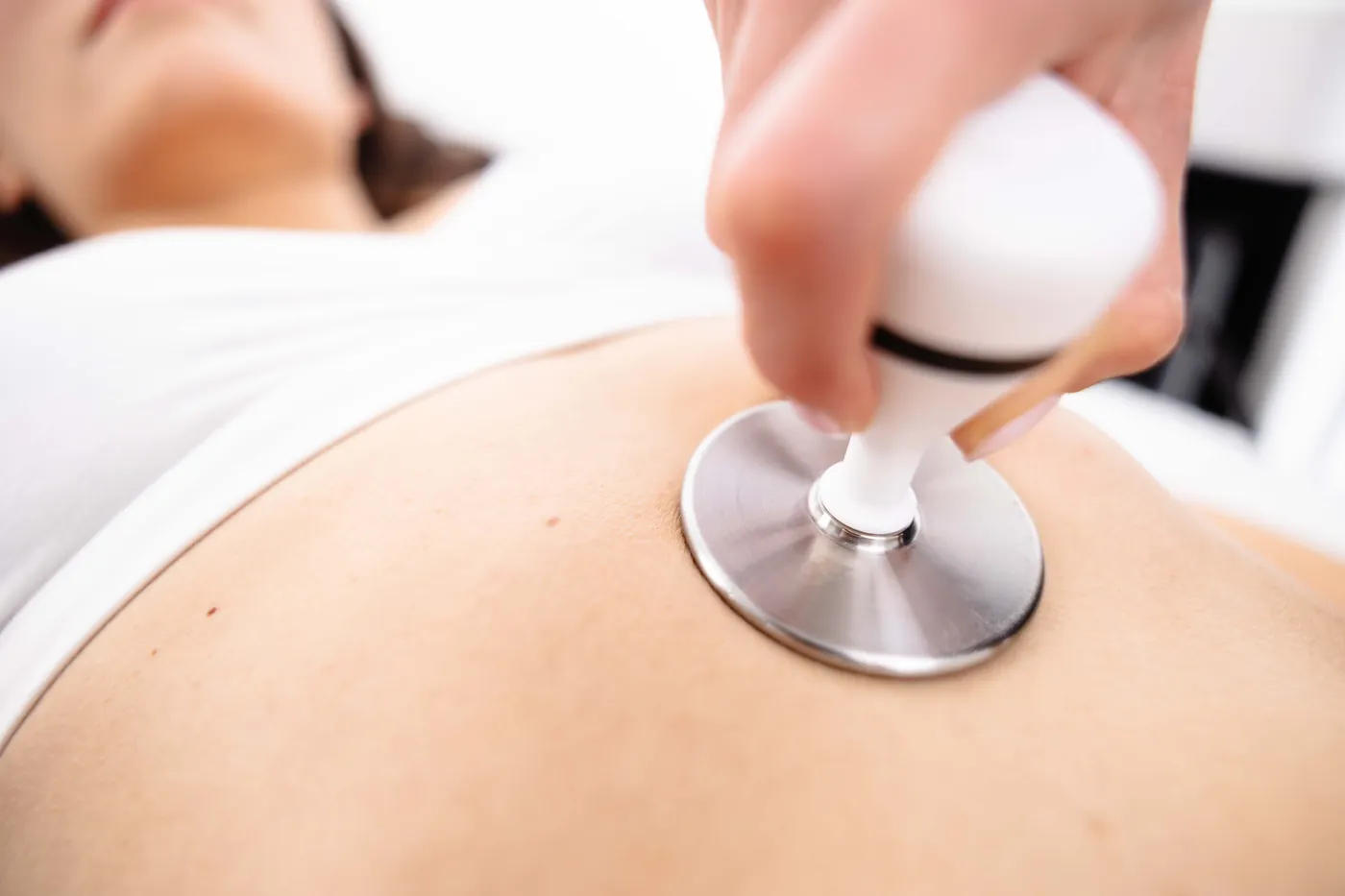
Preparation. The area is cleansed and a conductive cream or gel is applied. This lets the energy pass into the tissue evenly and lets the handpiece glide. On the body, a return plate may be placed against the skin elsewhere; this is normal and completes the circuit.
Treatment. The practitioner moves the handpiece over the area in slow, overlapping passes. You will feel warmth building over the first minute or two, then a steady, deep heat, like a hot-water bottle held against the skin. The practitioner checks the temperature as they go and adjusts the energy to keep it in the working range. If anything feels too hot, say so; the energy can be turned down instantly. Some platforms combine radiofrequency with gentle suction or with massage, which feels like a firm kneading.
Duration. A face treatment usually takes 20 to 40 minutes. A body area takes longer, often 30 to 60 minutes depending on its size. Most people are in and out of the clinic within the hour.
Afterwards. The gel is removed and the skin may look slightly flushed, the way it does after exercise. That usually settles within an hour or two. There is no dressing and no numbing, and most people carry on with their day; if anything in your plans should wait, your practitioner will tell you.
The experience should feel calm and unhurried. If it does not, the problem is the clinic, not the treatment.
How many sessions, and how long do results last?
Anyone who gives you a single number without seeing you is guessing. The honest answer is that it depends on the area, on your skin, on your age and on what you are hoping to see. But there are patterns, and they are worth knowing before you go in.
Sessions. Radiofrequency is a course treatment. Clinics typically suggest somewhere between four and eight sessions, spaced a week or two apart, with the number depending on the area and the starting point. A younger patient treating early changes around the eyes may need fewer; a larger body area, or skin that has been through significant change, may need more. Some people notice a difference in how their skin feels after the first session, because of the immediate effect of warmth and circulation. The changes clinics are working towards, which come from the tissue’s own activity over time, build gradually across the course and in the weeks after it.
What our Spanish protocols look like. In Spain, where our platforms have been in clinics longest, the protocols we publish give a useful reference point. A face and neck programme typically runs to around eight sessions, weekly in the first month and then spaced out. Arms are usually planned as a course of six to eight. Larger body areas such as the abdomen and buttocks run to eight to ten sessions, with an abdominal session taking around 40 minutes and longer body sessions anywhere from 30 to 90 minutes. Clinics set their own protocols, so treat these as a guide to the shape of a course, not a prescription.
Why it builds over time. The processes described in the laboratory research behind the technology, fibroblast activity and the synthesis of collagen and elastin, are biological processes with their own timescale. Collagen remodelling in the skin takes weeks, not hours. That is why a practitioner will usually ask you to judge the course as a whole rather than session by session, and why the photographs taken at consultation are useful.
How long it lasts. Because the treatment works with your own tissue rather than adding something to it, what you see is your skin behaving better, not a product that wears off. How long that lasts depends on the same things that affect skin generally: age, sun exposure, smoking, sleep, hormones and genetics. Most clinics suggest maintenance once a course is complete, anywhere from every six weeks or so for the neck and chin to every few months for the body, and patients who look after their skin between visits tend to hold their results longer.
What a good clinic will say. Expect a practitioner to talk in ranges, to explain what they are seeing in your skin, and to tell you when they think radiofrequency is not the best option. Expect them not to promise a specific outcome. In a regulated field, a promise is a warning sign, not a reassurance.
If you want to see what a course can look like, we publish before and after results from clinics using our platforms, with the treatment and the number of sessions given for each.
Aftercare: the days after a session
Radiofrequency asks very little of you afterwards, which is one of the reasons people choose it. There is no dressing to manage. There are, though, a few things that help the treatment do its work and keep the skin comfortable.
- Drink water. The tissue has been warmed and your circulation has been working. Being well hydrated for the rest of the day helps.
- Keep it cool for 24 hours. Skip the sauna, the hot bath and the hard gym session for a day. The skin has been at working temperature already and does not need more heat.
- Be gentle with the skin. No exfoliating, no strong actives such as retinoids or acids on the treated area for a couple of days. A simple moisturiser is fine and usually welcome.
- Use sun protection. This is good advice every day, but freshly treated skin is a good reason to take it seriously. SPF 30 or higher on the face.
- Leave it alone. If the area is slightly flushed or tender, let it settle on its own. A cool compress is fine if it is uncomfortable; ice directly on the skin is not.
- Keep your appointments. The spacing between sessions is part of the protocol, not an administrative convenience. If you need to move one, let the clinic know and they will advise.
Your clinic will give you its own aftercare sheet, and where it differs from the list above, follow the clinic. They have seen your skin and we have not.
What sets the price
We do not set clinic prices, and we are not going to quote figures that would be out of date or wrong for your area. What we can tell you is what drives the number, so you can compare quotes sensibly.
The area. A session on the eye contour uses a small handpiece for a short time. A session on the abdomen or thighs uses a large handpiece for much longer. Price follows time and area.
The number of sessions. Most clinics price a course rather than a single session, and the per-session price usually comes down in a course. Ask what the course includes and what happens if you need an extra session.
The practitioner. Treatment delivered by a doctor, a nurse prescriber or a senior aesthetician in a medical clinic will cost more than the same treatment in a beauty setting, and the difference is usually in the consultation, the screening and the judgement, not the handpiece.
The platform. Clinics investing in medical-grade equipment with real-time temperature control, multiple delivery modes and manufacturer training pass some of that cost on. It is reasonable to ask which platform a clinic uses and why they chose it.
The location. Central London is not Leeds, and both are not rural Wales. The same treatment varies with rent.
The question to ask is not “what does radiofrequency cost” but “what am I getting for this price”. A quote that is noticeably cheaper than the others may reflect a shorter session, an older platform or a less experienced practitioner. None of those is necessarily wrong, but you should know which it is.
How to choose a clinic, and what to ask
The treatment is only as good as the person delivering it. These are the questions we would ask, as the people who make the equipment and train the clinics that use it.
Who will treat me, and what is their training? Ask about qualifications and about training on the specific platform. Manufacturers run training for the clinics that buy their equipment; a clinic should be able to tell you who trained them and when.
Will I have a consultation first? The answer should be yes, and it should include your medical history and the screening list above. If a clinic offers to treat you on the spot without one, go elsewhere.
Which platform do you use, and why? You do not need to know the engineering, but a practitioner who can explain their choice, and what the platform measures while it works, is a practitioner who understands what they are doing. Our own platforms monitor tissue temperature in real time, and a clinic using one should be able to tell you what the platform is measuring during your session and why that matters.
How many sessions do you think I need, and why? Listen for a reasoned range, not a fixed number or a hard sell on a large package.
What should I expect afterwards, and who do I call if something is not right? There should be a clear answer and a direct number.
Can I see results from people like me? Photographs of real patients, with the treatment and number of sessions stated, are a reasonable thing to ask for. So is the consent behind them.
Is the clinic registered and insured? In England, clinics providing certain treatments are registered with the Care Quality Commission; in any case, ask about professional registration and insurance. A confident clinic will not mind being asked.
The tone of the answers tells you as much as the content. A good clinic explains. An average one sells. We list the face treatments our platforms are used for, and the clinics we work with are trained to answer every question above.
Where HEBE fits
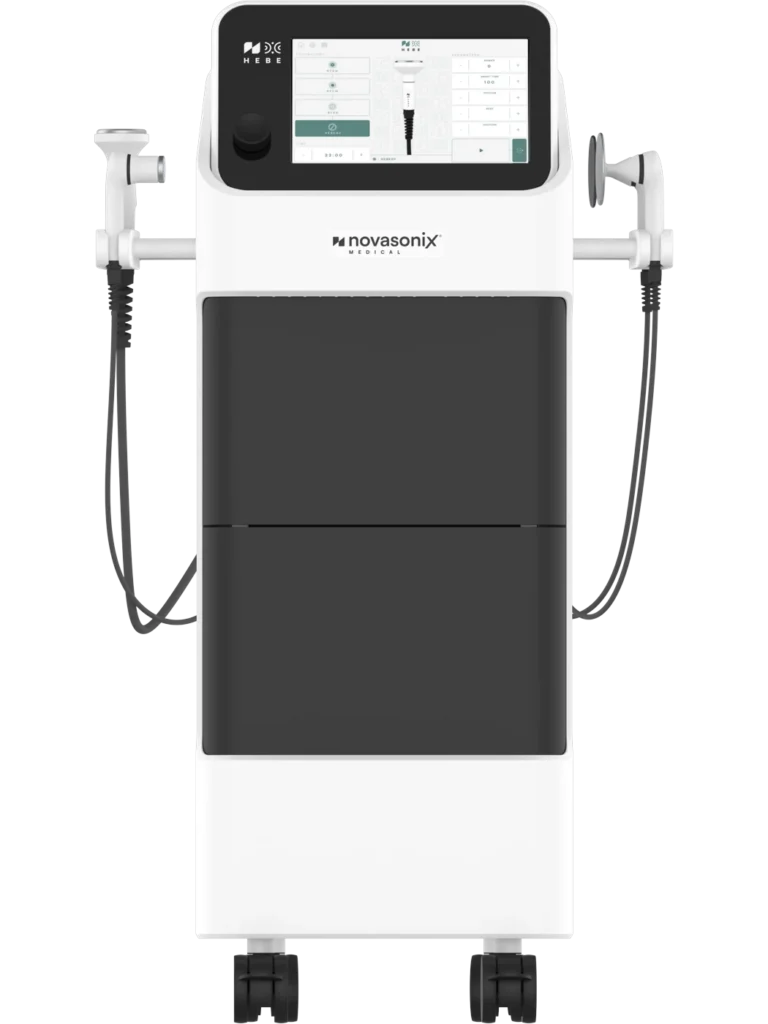
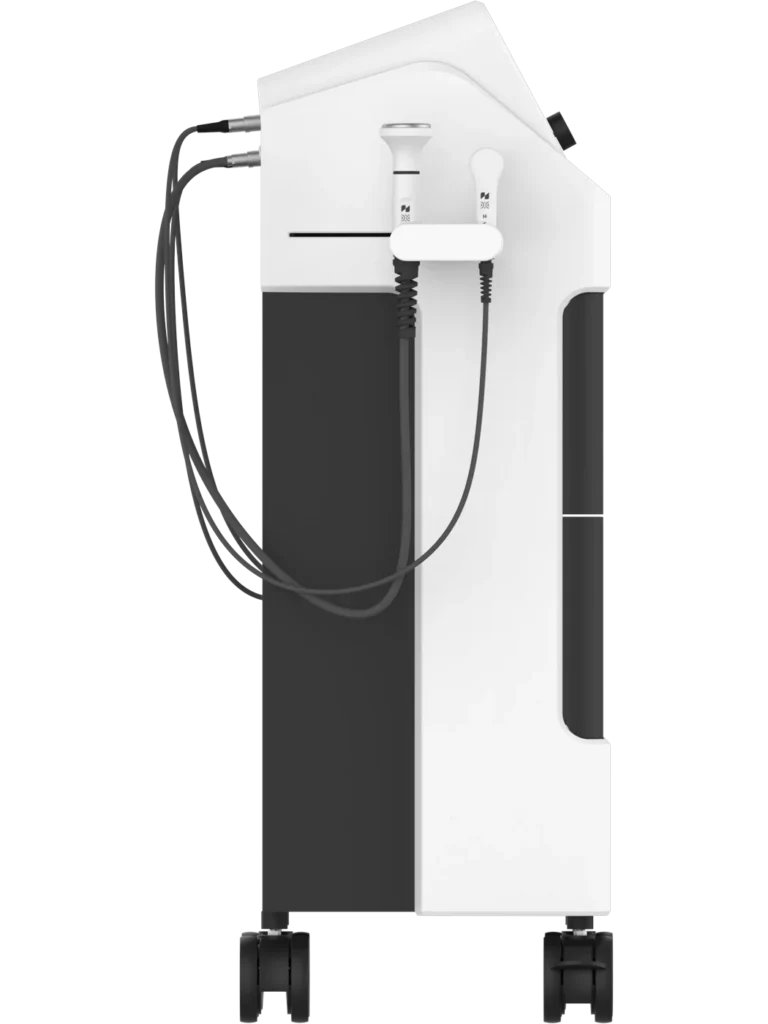
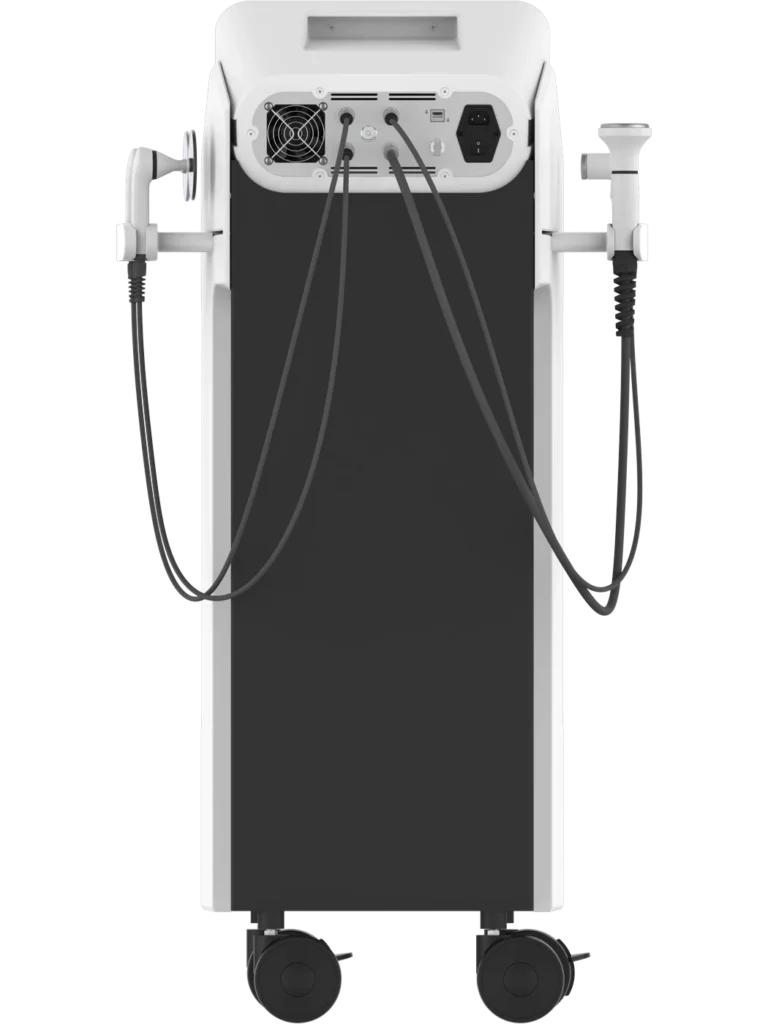
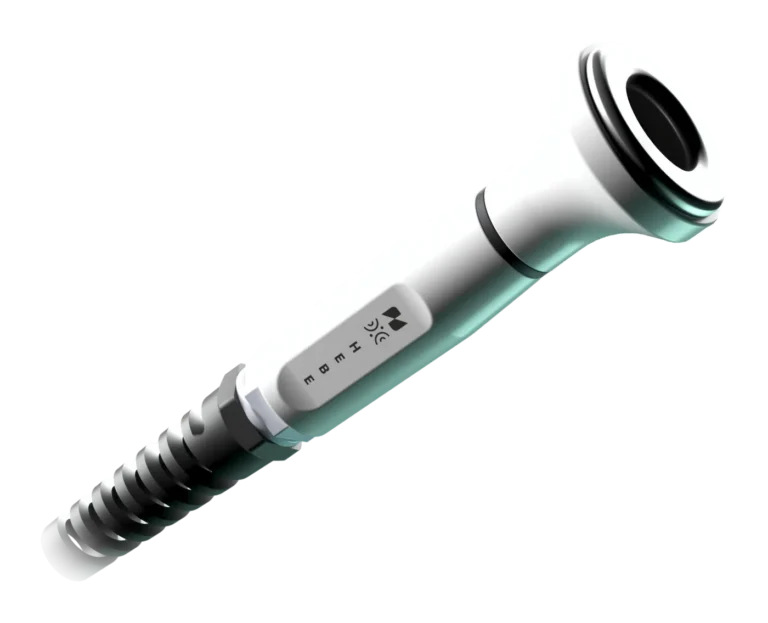
HEBE is the radiofrequency platform from Novasonix, designed and made in Spain and CE-marked as a medical device. It delivers radiofrequency at 448 kHz through four energy delivery modes: capacitive, resistive monopolar, resistive bipolar and resistive with vacuum, known as HEBEGY. Different applicators plug into the same platform, so a practitioner can move between modes within one session.
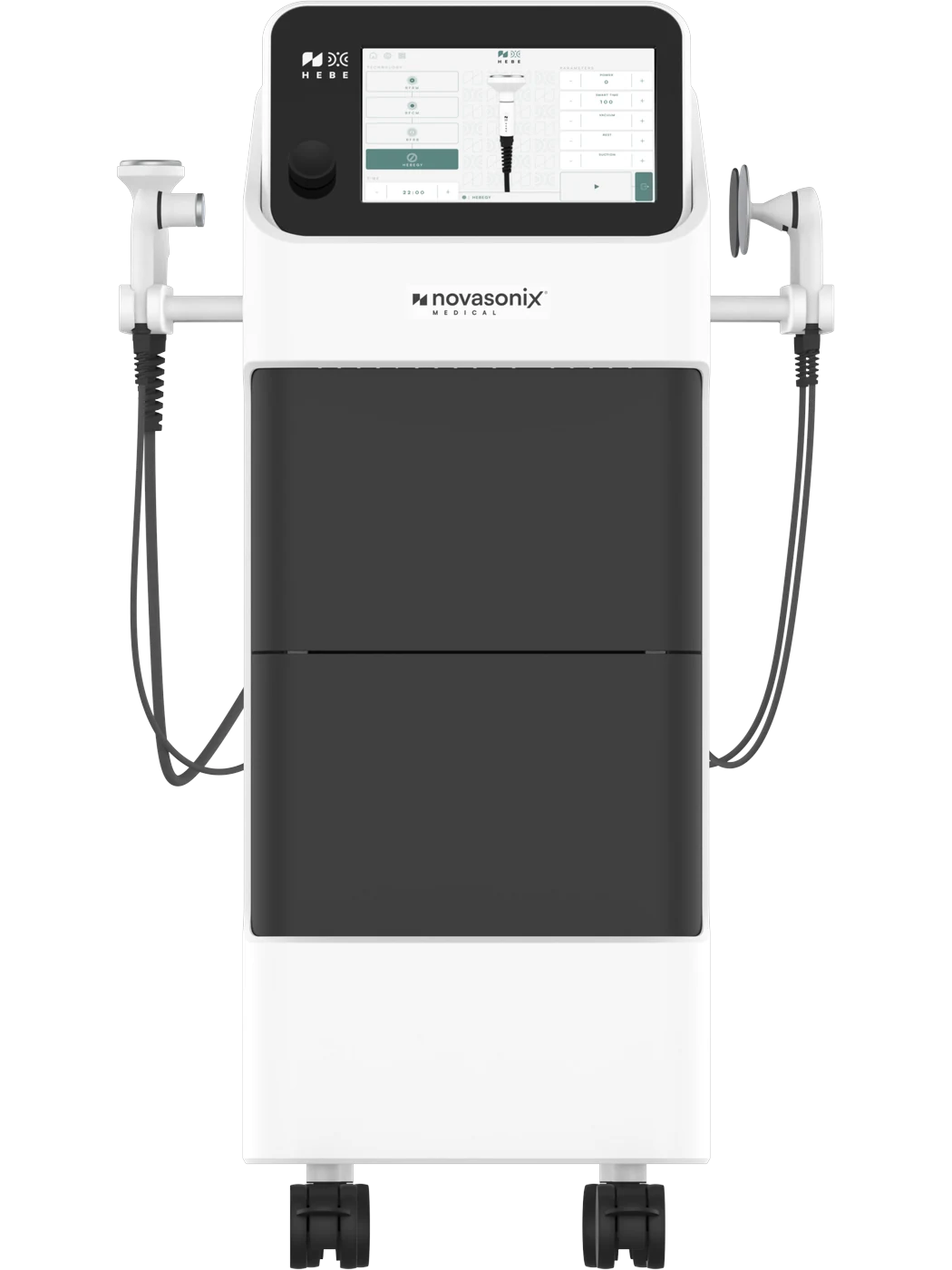
HEBE is designed for hair, face and body treatments. It is certified as a medical device under the Medical Device Regulation 2017/745 (SGS, CE 1639) for the management of musculoskeletal disorders, rheumatic pathologies and pelvic floor syndrome and related disorders. Other uses are outside that certification. As with any radiofrequency platform, ask your clinic how they use it and what a course involves. You can read more on the HEBE platform page, or see the whole Novasonix range.
Combining radiofrequency with other treatments
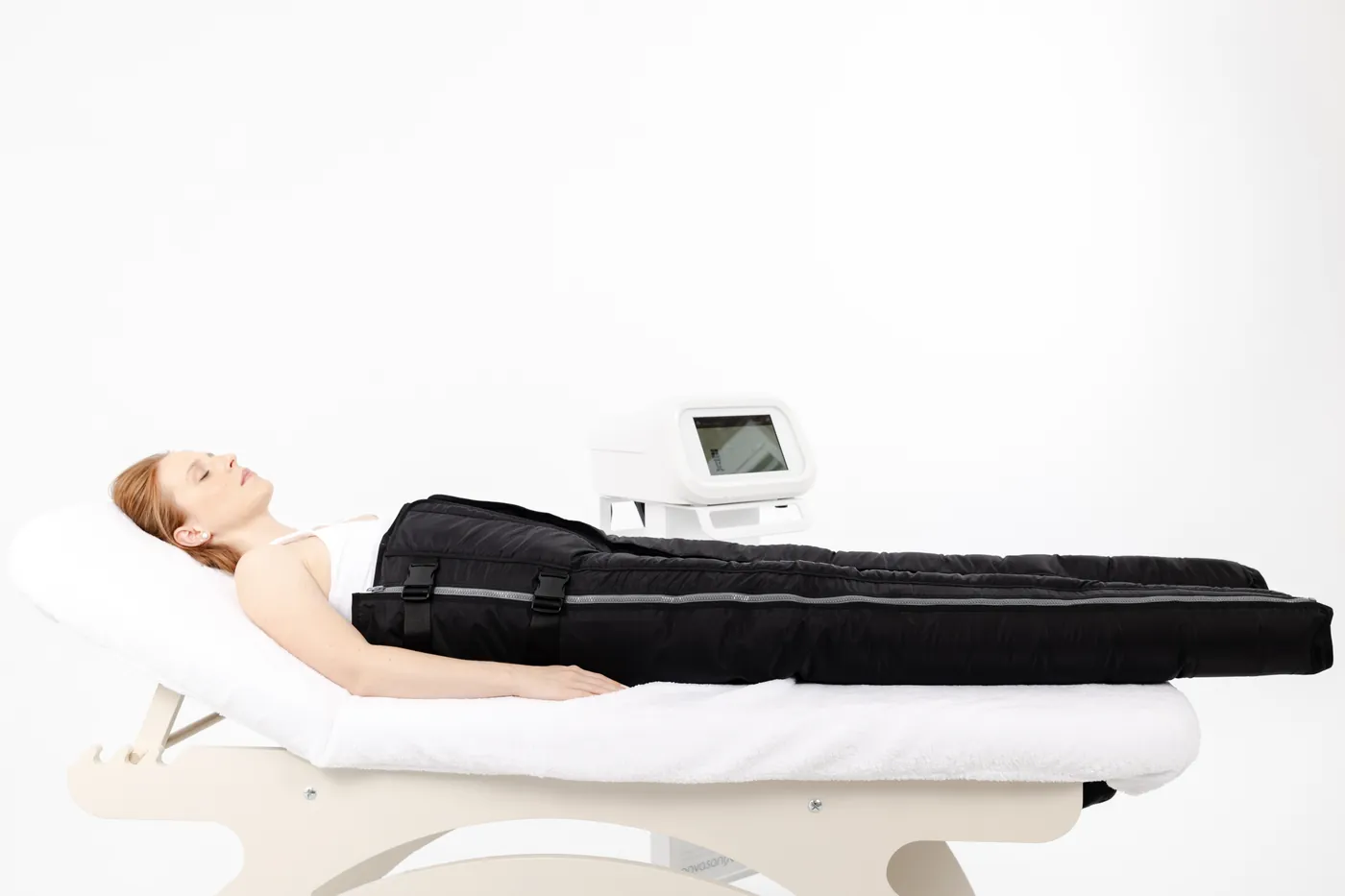
Radiofrequency is often one part of a plan rather than the whole of it. The combination clinics use most on the body is radiofrequency with lymphatic drainage, either manual or by pressotherapy, where the drainage session helps the tissue clear fluid and the radiofrequency works on the skin’s structure. If you are considering body treatment, or you are recovering from surgery, it is worth reading about lymphatic drainage before your consultation.
On the face, radiofrequency sits comfortably alongside skincare, LED, and most injectable treatments, with sensible spacing that your practitioner will set. It is not usually combined with ablative laser or chemical peels in the same period, because the skin needs time to recover from those first.
Whatever the plan, the principle is the same: one practitioner, one record, one sequence that makes sense. A clinic that offers several treatments and can explain why they belong together is doing it properly.
Before you book
Radiofrequency treatment is safe when it is screened, monitored and delivered by someone who understands it. It is comfortable, it fits around a normal day, and it works with your own skin rather than against it. What it asks of you is patience across a course and honesty with your practitioner about your history and your expectations.
If that sounds like the kind of treatment you are looking for, the next step is a consultation. Find out more about the treatments clinics use our platforms for, and take this guide with you.
Frequently asked questions
Is radiofrequency treatment safe?
Yes, when it is delivered by a trained practitioner on a CE-marked platform that monitors tissue temperature. The energy is non-ionising, nothing is injected or cut, and the skin’s surface stays intact. Clinics screen for the situations where it is not appropriate, such as pregnancy, implanted electronic devices and active skin infection.
Does radiofrequency hurt?
No. Most people describe it as a deep, steady warmth, similar to a hot-water bottle, and many find it relaxing. If the area ever feels too hot, the practitioner turns the energy down immediately.
What is the difference between capacitive, resistive and bipolar radiofrequency?
They describe where the energy goes. Capacitive delivery works closest to the surface for skin quality and firmness; resistive delivery reaches deeper into fat, muscle and connective tissue; bipolar keeps the current between two close electrodes on one handpiece, around a millimetre deep, for precise face and neck work.
How many radiofrequency sessions do I need?
Clinics typically suggest a course of four to eight sessions for the face, spaced a week or two apart, and eight to ten for larger body areas. In Spain, where our platforms have been used longest, a face and neck programme usually runs to around eight sessions. Your practitioner will give you a range after seeing your skin, not a fixed number.
How long do radiofrequency results last?
Because the treatment works with your own tissue, what you see is your skin’s own activity rather than a product that wears off. How long it lasts depends on age, sun exposure, lifestyle and genetics. Most clinics suggest maintenance after a course, from every six weeks or so for the neck to every few months for the body.
What are the side effects of radiofrequency treatment?
Mild redness and warmth for a few hours are normal. Slight swelling or tenderness can occur, especially after body treatment, and settles on its own. Burns are rare and should not happen with proper temperature monitoring. Contact your clinic the same day if anything seems out of proportion to what you were told to expect.
How much does radiofrequency treatment cost?
We do not set clinic prices. The price depends on the area treated, the number of sessions, the practitioner’s qualifications, the platform used and the clinic’s location. Most clinics price a course rather than single sessions. Ask what the price includes before comparing quotes.