Tummy skin tightening is the treatment patients ask about most, followed closely by the arms and the neck. Radiofrequency is one of the most widely used ways European clinics approach all three, and most of the questions people ask are the same whichever area they have in mind. Will it work on my stomach? Is it any good for arms? What can it do for the neck and under the chin? This guide goes area by area, so you can find the part of the body you are thinking about and read what clinics use radiofrequency for there, how a session tends to feel, and what to ask before you book.
If you want the basics first, start with the patient’s guide to radiofrequency treatment, which covers safety, sessions and what to expect in general. This piece assumes you know roughly what radiofrequency is and want to know what it means for a specific area.
How radiofrequency body treatment works, in plain terms
Radiofrequency is a form of energy, in the same family as the radio waves that carry a broadcast, delivered into the body through a handpiece held against the skin. As the energy passes through tissue it meets resistance, and that resistance produces gentle, controlled warmth from the inside. The warmth is the point. The platforms used in clinics are designed to hold the tissue at a comfortable, measured temperature for a set time, rather than to heat it as much as possible.
That warmth is where the biology starts. The laboratory research behind the technology describes radiofrequency activating fibroblasts, the cells in the skin’s deeper layer that make collagen and elastin, and supporting the renewal of the tissue around them. We call this Regenerative Intelligence™: the idea that the body already has the mechanisms it needs, and the treatment’s job is to activate them in a controlled, repeatable way. For a patient, the practical translation is that radiofrequency is used to work on skin quality, firmness and texture by encouraging the skin’s own structure, not by adding anything to it or removing anything from it.
Two words come up on most clinic menus and are worth knowing. Capacitive delivery works closer to the surface, in the skin and the layer just beneath it, and is the mode clinics choose when the aim is skin quality and firmness. Resistive delivery reaches deeper, into the fat layer, muscle and connective tissue, and is the mode chosen for tone, circulation and tissue that sits further down. Many body sessions use both, moving between them as the practitioner works across an area. A third mode, bipolar, keeps the current between two electrodes set close together on a single handpiece, so the energy stays very superficial, around a millimetre deep, which is why it tends to appear in face and neck protocols more than on the body.
None of this is new. Spanish and Italian clinics have been running radiofrequency body protocols for well over a decade, and the Spanish-language guides on treatment by body area are among the most-read pages we publish. What follows is the same ground, with the figures from our Spanish protocols.
Tummy and stomach skin tightening
The stomach is the area people ask about most, and it is also the one where expectations need setting most carefully. Radiofrequency on the abdomen is a skin and tissue treatment. Clinics use it where the skin over the stomach has lost firmness, where the texture has changed, or where the tissue feels lax after the body has changed shape. It is not a way of changing body weight, and a good clinic will say so at the consultation.
The situations where clinics most often suggest abdominal radiofrequency are the ones where the skin has had to stretch and then settle. After pregnancy, after significant weight change, and simply with the passing of years, the abdominal skin can sit differently from the way it did: softer, looser, with a different surface. If that is your starting point, the relevant treatment pages are skin after weight loss and body contouring.
Stretch marks are a separate question and worth raising separately with your clinic. Radiofrequency is used on the texture of the skin where stretch marks sit, and clinics often combine it with other approaches for that purpose. What it cannot do is remove a mark; the honest framing is that it is used to work on the quality of the skin around and within them.
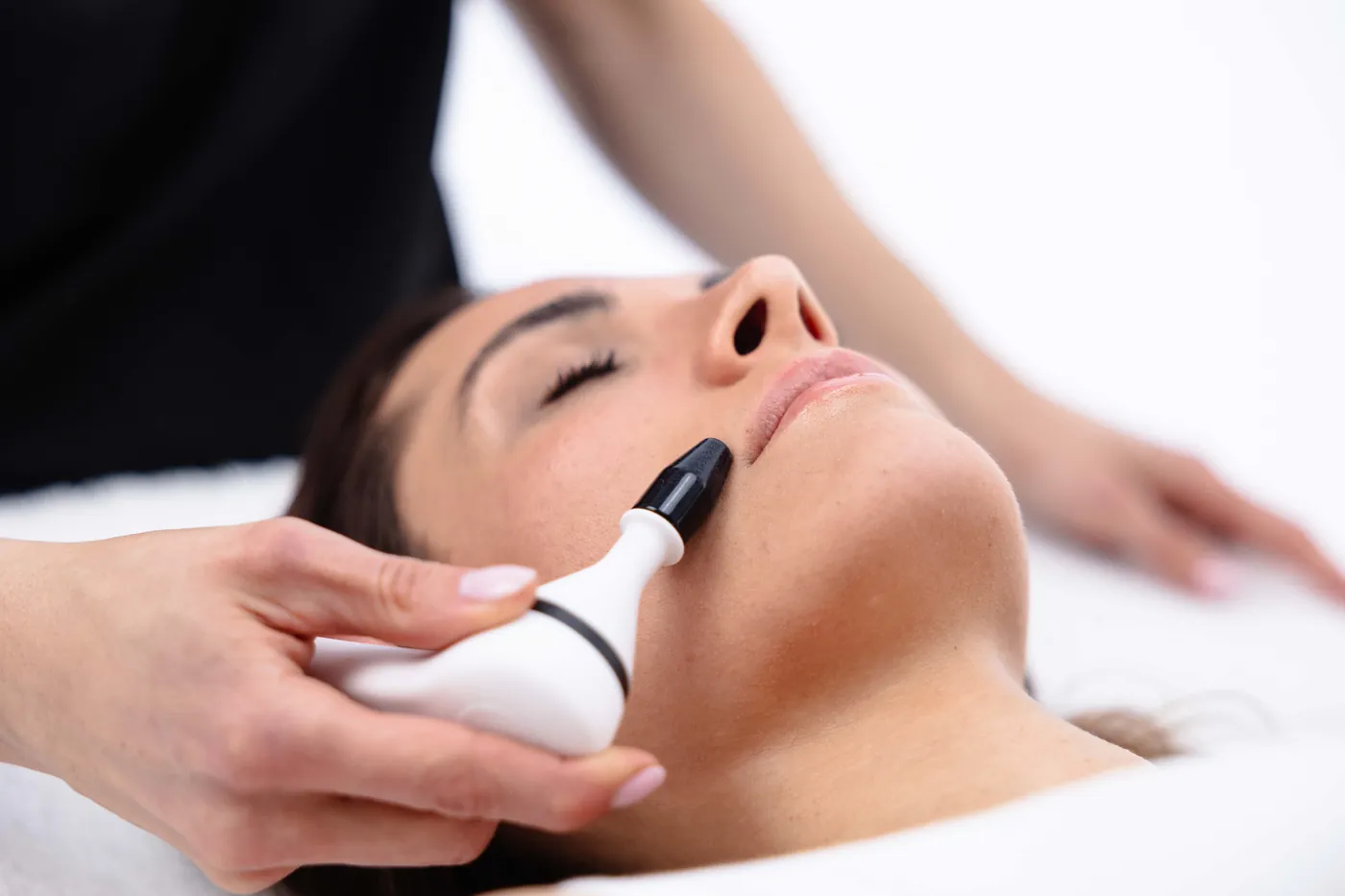
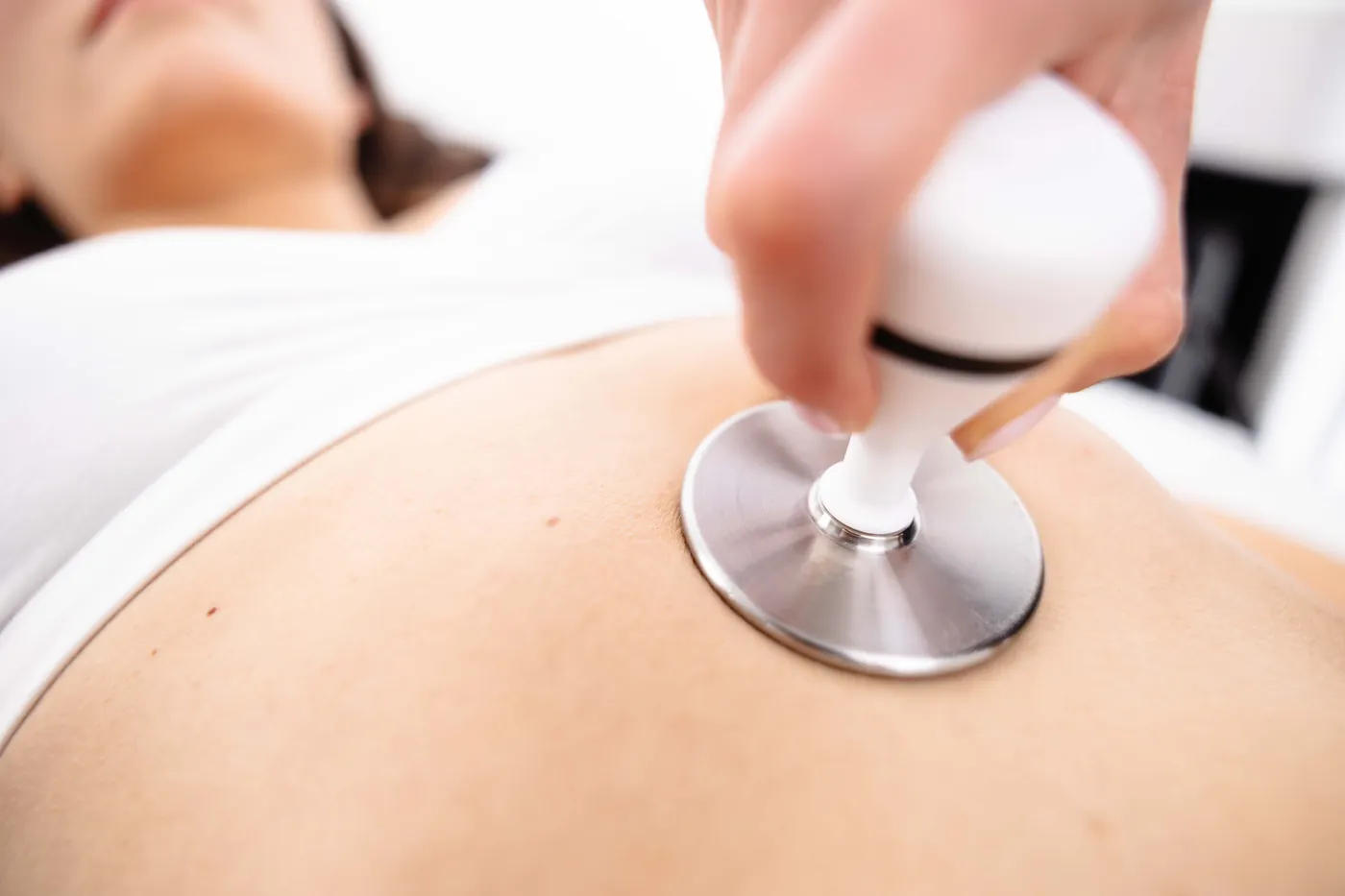
A stomach session usually runs to around forty minutes of handpiece time. The practitioner applies a conductive cream or gel, then works the handpiece in slow, overlapping passes across the area, moving between capacitive and resistive delivery as the protocol requires. The sensation most people describe is a deep, spreading warmth, like a hot-water bottle that moves. It should never be painful. If it is, say so, because the temperature is adjustable and the practitioner is monitoring it throughout.
In the protocols we publish in Spain, an abdominal course runs to up to ten sessions, followed by maintenance sessions after around six months. Your clinic will set its own number for your skin, but that is a fair picture of the commitment.
Clinics typically screen for pregnancy, any metal implant or pacemaker, active skin infection in the area, and recent abdominal surgery before treating the stomach. If you have had a caesarean or other abdominal surgery, tell the clinic how long ago; many practitioners will treat around a healed scar and some use radiofrequency as part of post-surgical skin care once the surgeon is happy.
Arm skin tightening
The upper arm is where many people first notice skin behaving differently. The skin on the back of the arm is thin, it has little underlying support, and it is one of the first places to soften with time or after the arm has changed size. The search term people use for this is rarely polite, but the question behind it is simple: can radiofrequency do anything for the skin on my arms?
It is one of the areas where clinics use it most. The aim on the arms is almost always skin firmness and tone, and the treatment pages that fit are firming and toning and, where the arms have changed size, skin after weight loss. The arm is a small area with the skin close to the surface, so capacitive delivery does most of the work, with resistive passes along the underside where the tissue is deeper.
Sessions are shorter than for the stomach, typically fifteen to twenty-five minutes for both arms, and are often added to a session on another area. Most people find the arms one of the most comfortable areas to treat: a warm, even sensation along the length of the arm, with the skin slightly pink immediately afterwards and back to normal within the hour.
Our Spanish protocols plan the arms as a course of six to eight sessions. Ask your clinic how they space them and whether the arms are treated on their own or alongside another area.
One thing to ask your clinic: whether they treat the full circumference of the arm or the back only. Protocols differ, and if the skin at the front or the elbow is part of what bothers you, say so at the consultation rather than discovering on the day that it is not included.
Thighs and buttocks
Thighs and buttocks are the areas where radiofrequency and the subject of cellulite meet, so this section is as much about managing the conversation as about the treatment.
Cellulite is the dimpled, uneven texture that most women have on the thighs and buttocks to some degree. It is not a fat problem and it is not a fitness problem; it is a structural one, to do with how the fibrous bands under the skin anchor it to the tissue beneath, and how the fat lobules between those bands push against the surface. That is why diet and exercise change it less than people expect, and why the treatments clinics use for it work on the skin and the connective tissue rather than on weight.
Radiofrequency sits in that category. On the thighs and buttocks, clinics use resistive delivery to reach the connective tissue and the fat layer, and capacitive delivery to work on the skin’s surface quality. The warmth is also used to encourage local circulation in an area where it is often sluggish, which is why thigh protocols so often appear alongside lymphatic drainage. The full picture of what clinics offer for the area, and the honest framing of what radiofrequency is used for within it, is on the cellulite treatment page.
The outer thigh, the inner thigh and the buttock are usually treated as three zones in one session, which makes this one of the longer body appointments. In our Spanish protocols, body sessions on these areas run anywhere from 30 to 90 minutes depending on how much is included, over a course of eight to ten sessions. The sensation is the familiar deep warmth, strongest where the tissue is thickest. Some people find the inner thigh more sensitive than the outer; tell the practitioner, and they will adjust.
If the skin on the thighs has become loose rather than dimpled, after weight change for example, the better page to read is firming and toning; the treatment is similar but the goal, and how the clinic describes it, is different.
Knees and legs
The knee is an area almost nobody thinks to ask about until they notice it. The skin above the kneecap is loose by design, because the joint has to bend, and with time it can gather and crease in a way that bothers people far more than its size suggests. Radiofrequency on the knees is a short, precise treatment, capacitive delivery for the most part, with the handpiece worked in small circles over and just above the joint. Ten minutes a side is typical, and it is often added to a thigh session.
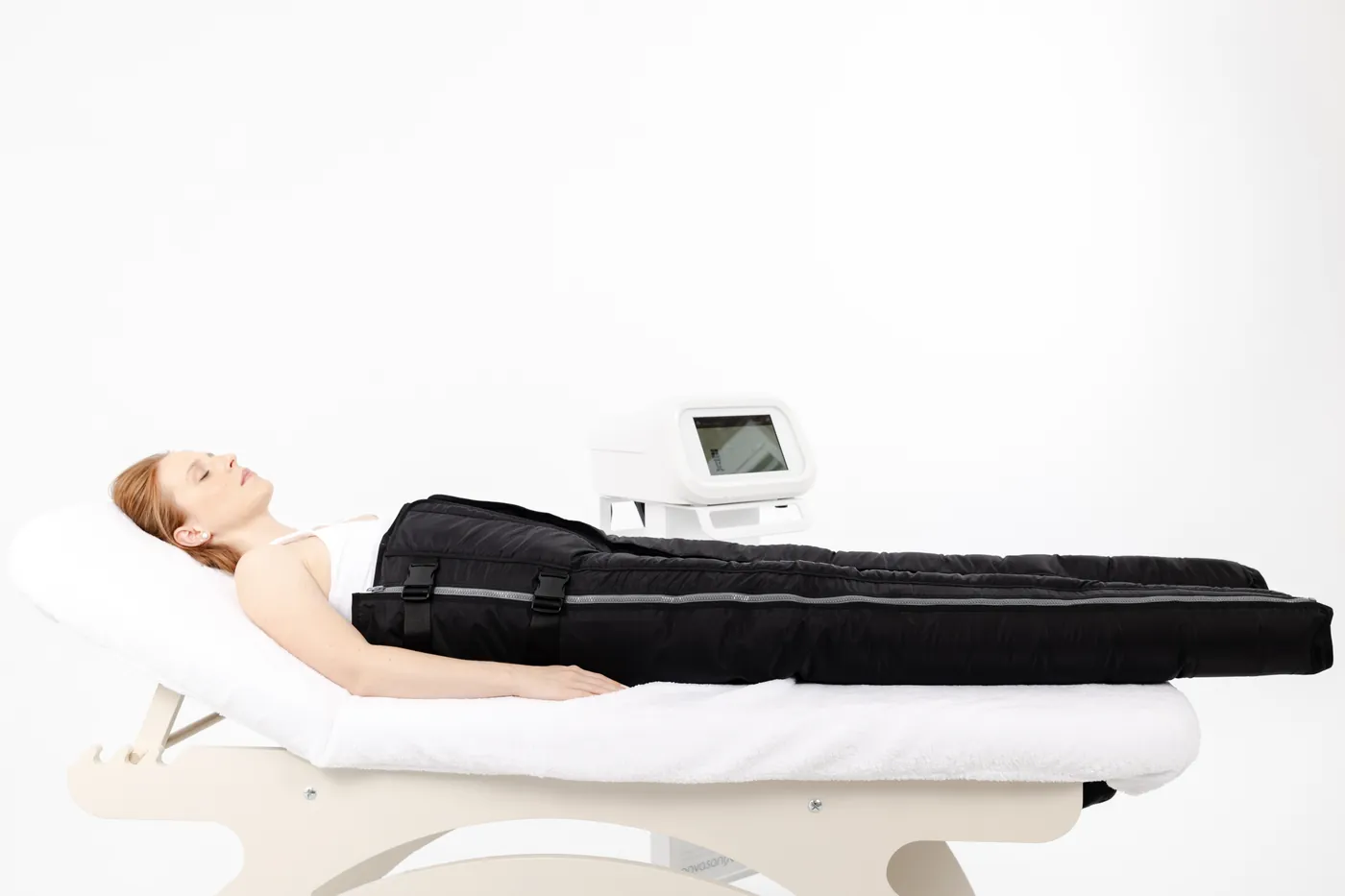
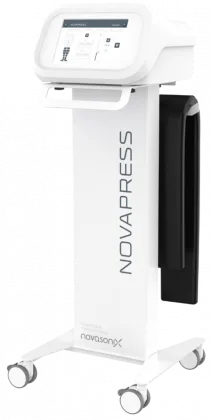
Lower down, the calf and the ankle are treated less for skin quality and more as part of a circulation and recovery protocol. Legs that feel heavy or swollen by evening, especially for people who stand or sit for long periods, are usually a drainage question rather than a radiofrequency one, and the page to read is tired legs and fluid retention. Where a clinic does use radiofrequency on the lower leg, it is usually resistive delivery for warmth and circulation, often before or after pressotherapy.
Hands
Hands give away more than most people realise, and they are one of the areas where radiofrequency is used in a way that surprises patients. The skin on the back of the hand is thin, with very little padding beneath it, so changes in skin quality show quickly: a crepey texture, visible tendons and veins, a surface that no longer sits smoothly.
Clinics use capacitive radiofrequency on the hands for skin quality and texture, with a small handpiece and short sessions, often ten to fifteen minutes for both hands. Some pair it with other approaches for the back of the hand; the hand rejuvenation page sets out what clinics typically offer and how radiofrequency fits within it. The sensation is a gentle warmth across the back of the hand, and it is one of the few areas where patients sometimes describe the session as pleasant rather than merely comfortable.
Neck tightening and the double chin
The area under the chin and along the neck is where body and face treatment overlap, and the search terms people use for it, double chin, turkey neck, jowls, all point at the same stretch of skin. It is one of the most-read topics on our Spanish site, and for the same reason it matters here: the neck shows change early and is hard to hide.
Radiofrequency on the neck is a precision treatment. The skin is thin, the structures beneath it (the windpipe, the thyroid, large blood vessels) mean a practitioner works carefully and at lower energy than on the body, and most protocols use capacitive or bipolar delivery close to the surface. Clinics use it for skin firmness and definition along the jawline and under the chin; the detailed page is jawline and jowls, which also covers how it is combined with facial treatment.
A neck and chin session is short, fifteen to twenty minutes, and the sensation is a mild, localised warmth. Clinics typically screen for thyroid conditions and ask about any neck surgery before treating the area. If the concern is more about volume under the chin than about the skin, say so at the consultation, because the honest answer from a good clinic may be that radiofrequency is only part of what they would suggest.
The protocol we publish in Spain for the double chin and neck is a good example of how a course is shaped: sessions weekly in the first month, twice in the second, around eight in total, then a maintenance session roughly every six weeks. A clinic may adjust that to your skin, but it is the pattern to expect.
Back and bra line
The upper back and the area around the bra line are treated less often, but they are worth mentioning because they come up and because the answer is straightforward. Clinics use radiofrequency here for skin firmness and texture, in the same way as on the arms: capacitive delivery for the surface, resistive passes where the tissue is deeper across the mid-back. Sessions are around twenty minutes and are usually part of a wider body programme rather than booked on their own. The lower back, where skin sits over the hips, is often included in a stomach session rather than treated separately, and the page that covers the whole area is body contouring.
Combining radiofrequency with lymphatic drainage
Most body programmes in European clinics do not use radiofrequency on its own. The most common pairing is with lymphatic drainage, either by hand or with a pressotherapy platform, and the logic is simple. Radiofrequency warms the tissue and encourages local circulation; drainage then helps the body move fluid out of the area through the lymphatic system. Clinics use the pairing on the thighs, stomach and legs in particular, and often schedule the two in the same appointment, radiofrequency first.
It is also the pairing clinics reach for in recovery work: after surgery, after pregnancy, and for legs that swell. If that is closer to your situation, our lymphatic drainage page explains how drainage works and who clinics say it is and is not for.
What clinics use
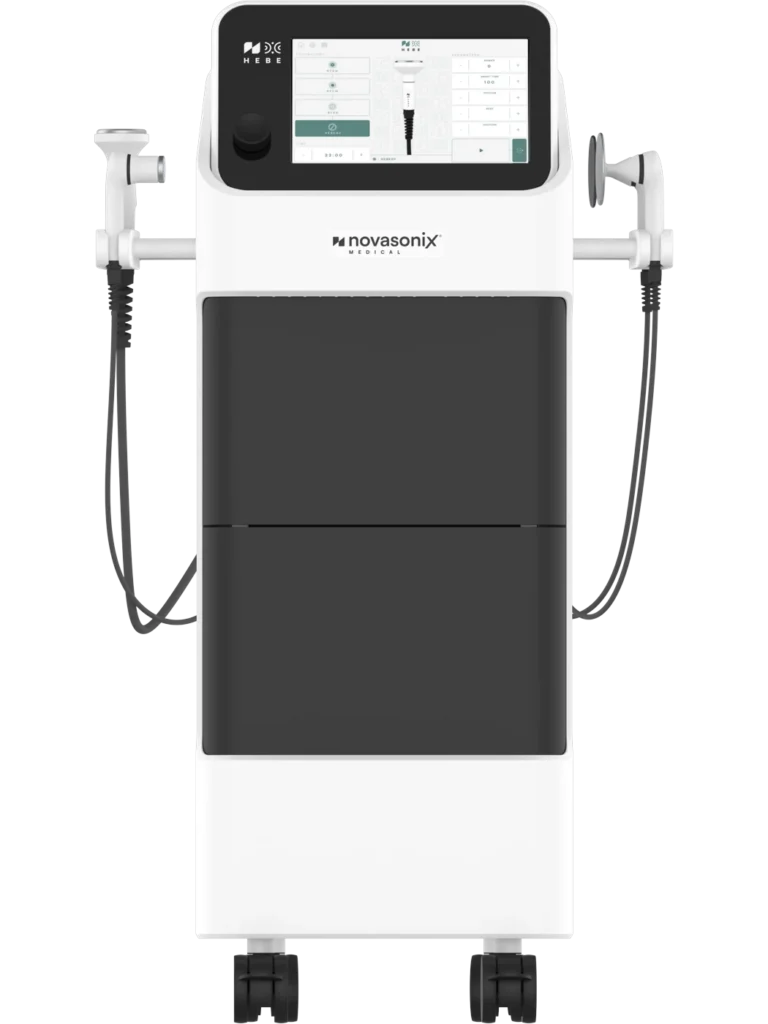
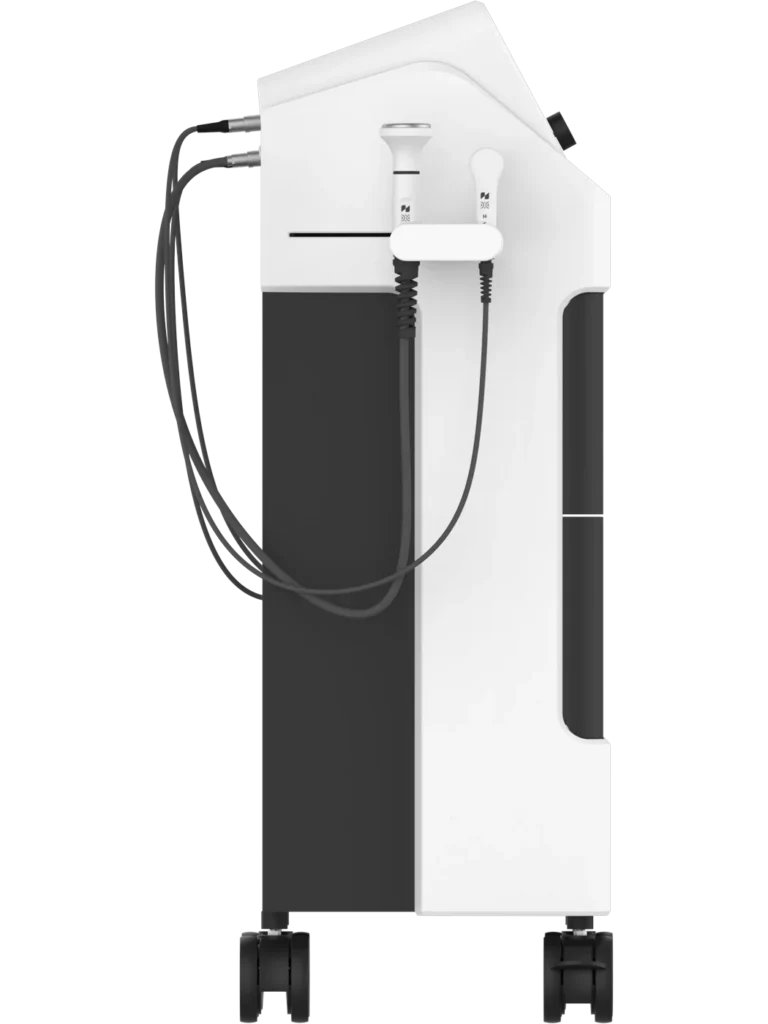
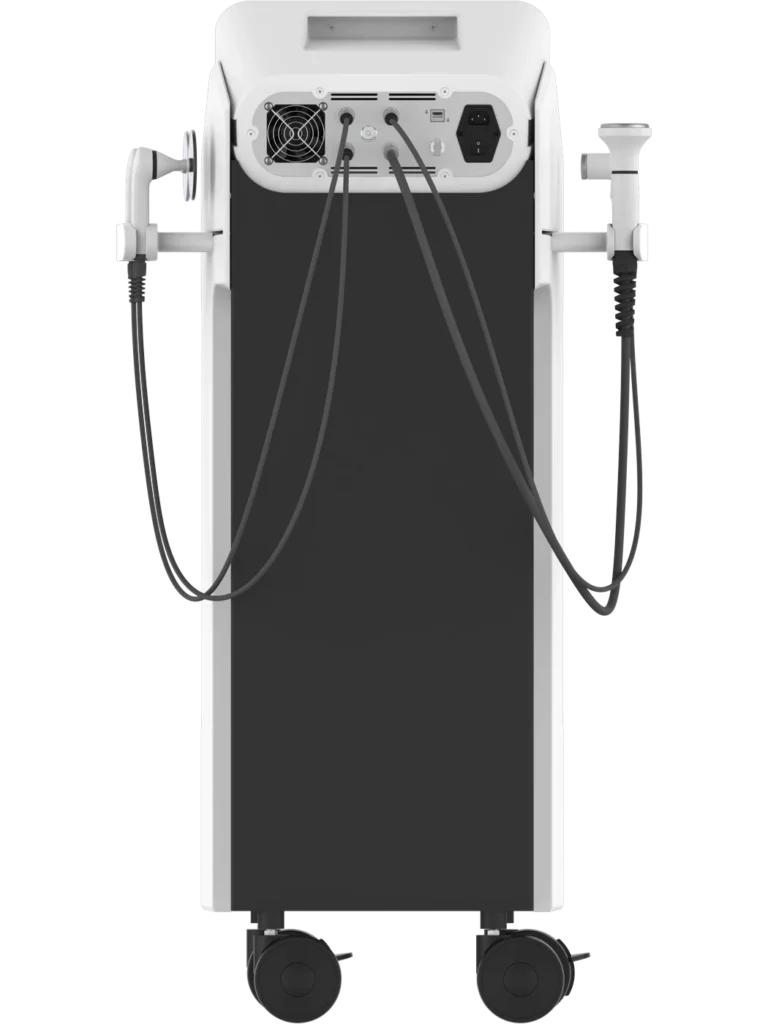
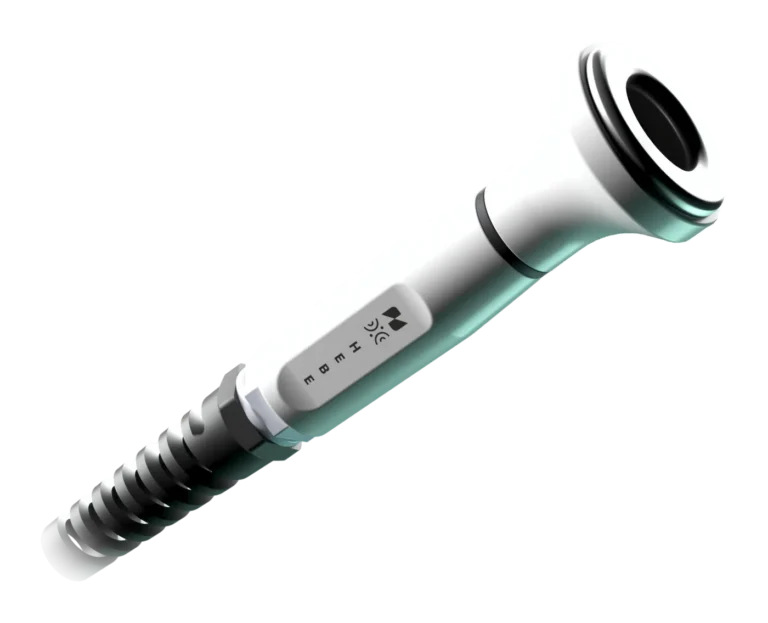
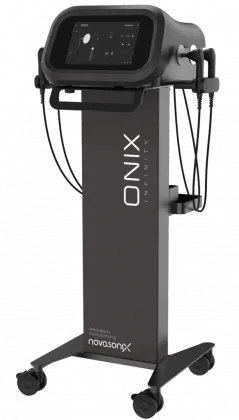
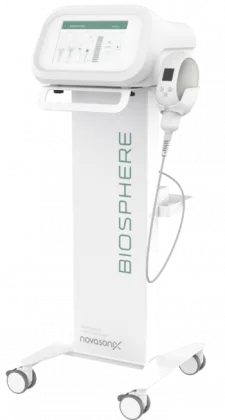
You will not usually choose the equipment, but it helps to know what you are looking at. Two of our platforms are used for body work, and they work in quite different ways. ONIX INFINITY combines radiofrequency with LED light on one platform, with handpieces for the face and the body; it is the platform behind the radiofrequency treatment described in this guide. BIOSPHERE takes a different route altogether: it is a mechanical massage platform, using our slaag motion technology, and emits no radiofrequency, light or other energy. Clinics often use the two alongside each other. Ask your clinic which platform they use and why they have chosen it for the area you are interested in; a confident answer is a good sign.
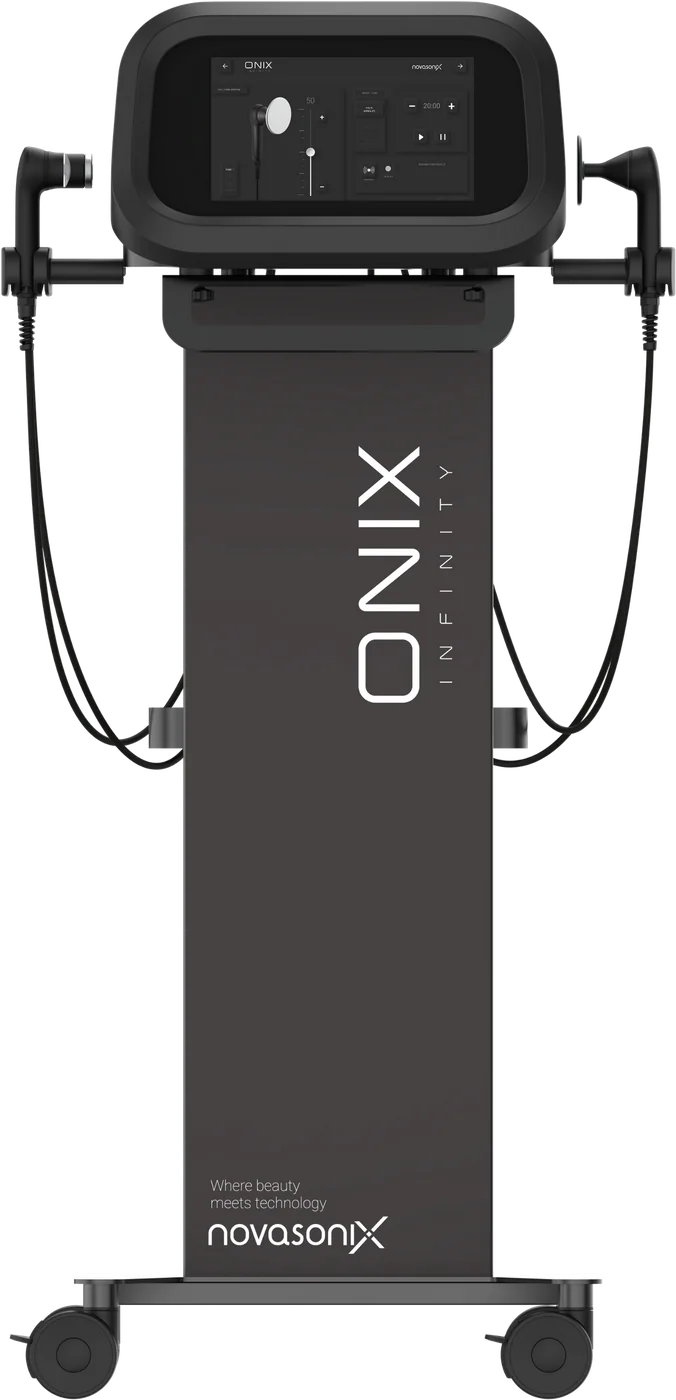
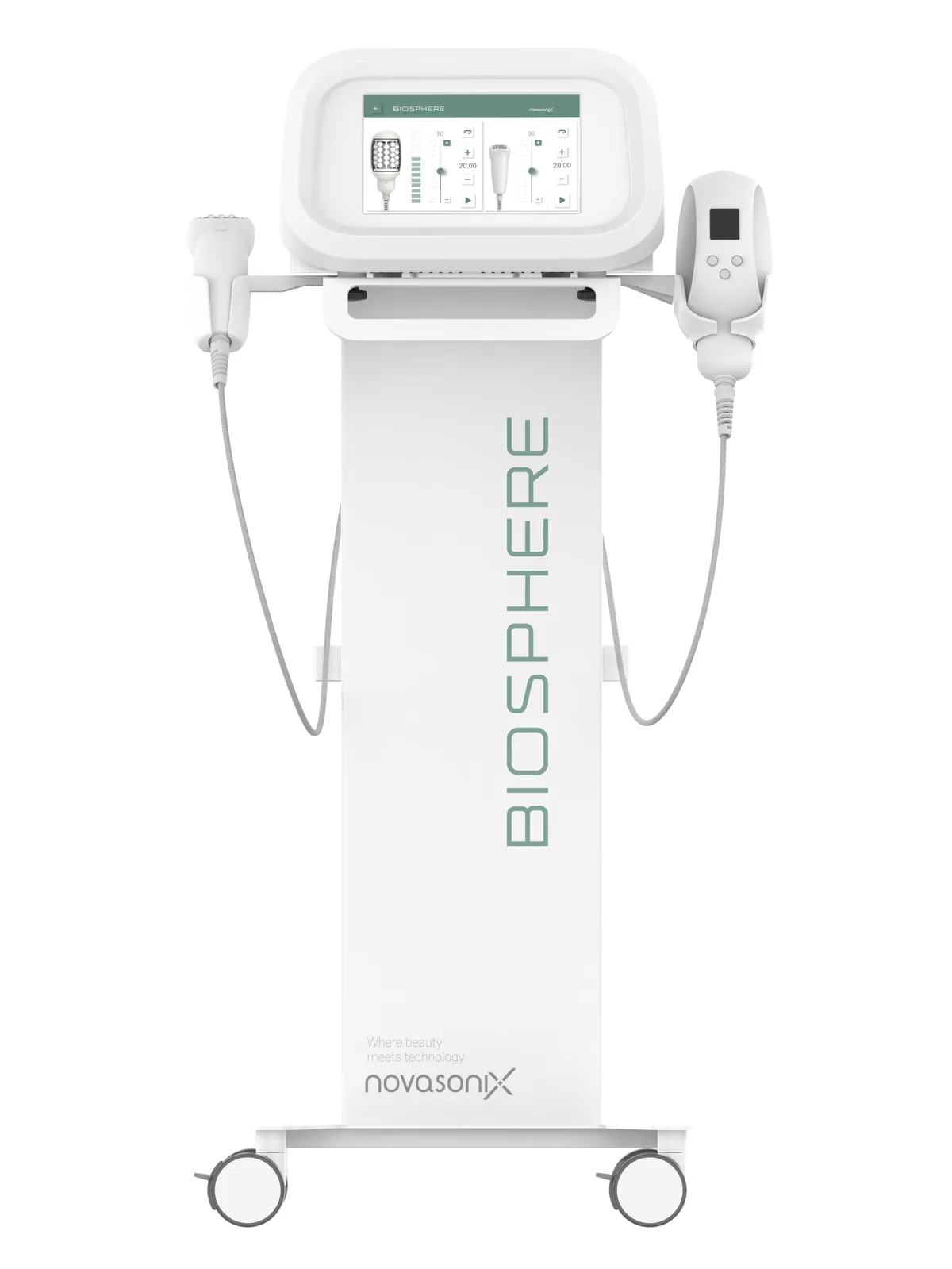
Read more on the ONIX INFINITY and BIOSPHERE DUAL pages, or see the whole range.
Sessions, sensations and what to expect
However many areas you have in mind, the shape of a radiofrequency body programme is similar. Clinics usually suggest a course rather than a single session, commonly six to eight for smaller areas such as the arms and eight to ten for the abdomen and thighs, a week or two apart, followed by occasional single sessions to maintain. Your clinic will set the number for your area and your skin; be cautious of anyone who promises a result from one visit or who cannot explain why they have suggested the number they have.
A session has three parts. The consultation, where the practitioner looks at the area, asks about your health and tells you what they would and would not use radiofrequency for. The treatment, which is the warmth described above, area by area. And the aftercare, which for radiofrequency is undemanding: drink water, keep the area out of strong sun for a day, skip very hot baths and heavy exercise that evening. The skin is usually pink immediately afterwards and settles within the hour.
What you should expect to see is change in the skin over the course of the programme, not after the first visit, and change in quality, firmness and texture rather than in size. Clinics photograph the area before and after for exactly this reason, and we publish examples from clinics using our platforms on the results page so you can see the kind of change practitioners describe.
If there is one thing to take from this guide, it is that the area matters less than the conversation. The same energy, the same warmth and the same biology are used from the stomach to the hands; what changes is the depth, the time and what the clinic is trying to achieve. Find a clinic that can explain all three for the area you have in mind, and you are most of the way there. The full list of what clinics use radiofrequency for on the body, area by area, is on the body treatments page.
Frequently asked questions
Does radiofrequency work for tummy skin tightening?
Clinics use radiofrequency for tummy skin tightening: skin firmness, texture and laxity, most often after pregnancy or weight change. It is a skin and tissue treatment, not a way of changing body weight. In our Spanish protocols an abdominal session takes around 40 minutes and a course runs to up to ten sessions.
Can radiofrequency be used on the arms?
Yes. The upper arm is one of the most common areas, treated for skin firmness and tone. Sessions are short, typically fifteen to twenty-five minutes for both arms, and our Spanish protocols plan a course of six to eight.
Is radiofrequency good for thighs and cellulite?
Radiofrequency is one of the treatments clinics use on the thighs and buttocks for skin quality and the connective tissue involved in cellulite, usually alongside lymphatic drainage. It works on the skin and tissue, not on weight, and a clinic should explain what it is and is not used for before you book.
Can radiofrequency be used for neck tightening and a double chin?
Clinics use radiofrequency under the chin and along the neck for skin firmness and definition, at lower energy than on the body. Our Spanish protocol runs weekly for a month, twice in the second month, around eight sessions in total, then maintenance roughly every six weeks.
How many radiofrequency body sessions do I need?
Most clinics suggest six to eight sessions for smaller areas such as the arms and eight to ten for the abdomen and thighs, a week or two apart, then occasional maintenance. The number depends on the area and your skin, and your clinic should explain why they have suggested it.
What does radiofrequency body treatment feel like?
A deep, spreading warmth, like a hot-water bottle that moves, strongest where the tissue is thickest. It should never be painful; the temperature is adjustable and monitored throughout. The skin is usually pink afterwards and settles within the hour.